

The Noise Floor:
Shielding High-Density AI Signal Integrity from High-Amperage EMI
Topic: EMI & Signal Integrity // Product: Voltz PowerWhips
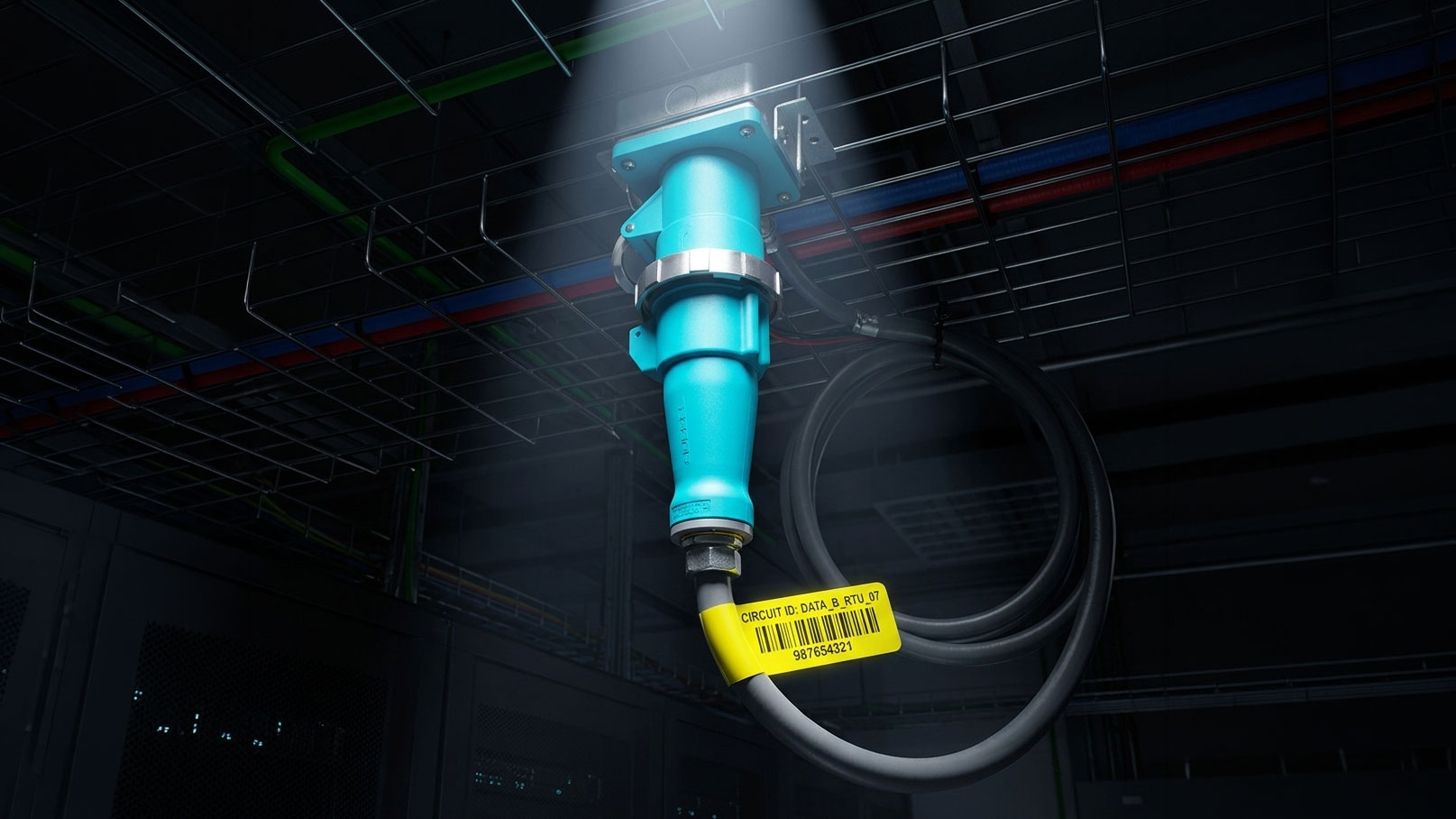
As hyperscale data centers scale rapidly to support massive artificial intelligence clusters, the proximity between high-amperage power distribution lines and low-voltage network cabling is shrinking.
In a dense server layout, rows of GPU-heavy server frames pulling up to 100kW+ run miles of Category 6A or fiber optic lines adjacent to the branch circuit conduits feeding the racks. This close architecture introduces a critical but frequently overlooked infrastructure risk: Electromagnetic Interference (EMI) and cross-talk.
When immense electrical currents pulse through data center floors, they create powerful, expanding magnetic fields. If the branch circuit cables are unshielded, this electromagnetic "noise" can induce unwanted current into adjacent data tracks, resulting in packet corruption, signal degradation, and forced retransmissions that subtly bottleneck computing latency.
Protecting the Signal Matrix from High-Amperage Currents
In deep learning or large language model (LLM) training, data throughput velocity is a core metric. Even fractional millisecond delays caused by signal corruption can choke processing efficiency across highly synchronized server arrays. Managing the localized noise floor requires strict compliance with physical isolation standards and robust physical shielding directly at the branch circuit level.
Allowing exposed conductors or non-metallic conduits to run parallel to low-voltage network pathways introduces immediate signal integrity risks. Eliminating these vulnerabilities requires specialized electrical engineering choices:
- Continuous Structural Shielding: Branch pathways must deploy Liquid-tight Flexible Metal Conduit (LFMC). The continuous, interlocked metallic inner core serves as an effective electromagnetic shield, trapping structural radiation and preventing cross-talk from bleeding into nearby network lines.
- Low-Resistance Interface Grounding: The connection boundaries at the power distribution unit (PDU) or rack junction box must remain tightly bonded. Utilizing precision-terminated, industrial-grade IEC 60309 pin-and-sleeve plugs, NEMA locking devices, or heavy-duty CS twist-locks ensures an airtight, low-resistance connection that maintains a stable, continuous path to the ground.
- Application-Specific Electrical Sizing: Shielding capability must not restrict electrical delivery. Branch configurations must remain fully tailorable to support the unique electrical profiles of AI hardware, sustaining currents from 15A up to 100A+ and handling voltages from 125V through high-capacity 480V layouts.
The Voltz Standard: Locally Engineered, Extensively Verified
Voltz PowerWhips by Raptor Power Systems are precision-built to maintain complete signal isolation and raw power density inside the world's most complex hyperscale spaces. Every Voltz assembly is a certified UL Listed cable assembly, manufactured in strict compliance with National Electrical Code (NEC) guidelines. To guarantee total reliability before deployment, 100% of our power whips undergo comprehensive factory verification testing at our facility—including insulation resistance (Megger testing), continuity mapping, and precise polarity checks to ensure absolute safety.
In the competitive AI infrastructure landscape, project timelines cannot afford the typical 12-to-16-week lead times common with overseas hardware suppliers. Raptor Power Systems removes this vulnerability by operating a completely domestic 120,000 square foot manufacturing footprint in Champaign, Illinois. Our localized US supply chain enables our design team to provide detailed quotes within 24 hours, alongside highly consistent 4-week production lead times. Secure your data center's structural capacity and protect your signal velocity with electrical infrastructure built to withstand the pressure.