

Rumble in the Whitespace: Seismic Resilience & Structural Anchorage For High-Density PowerWhips
Topic: Seismic Compliance // Product: Voltz PowerWhips
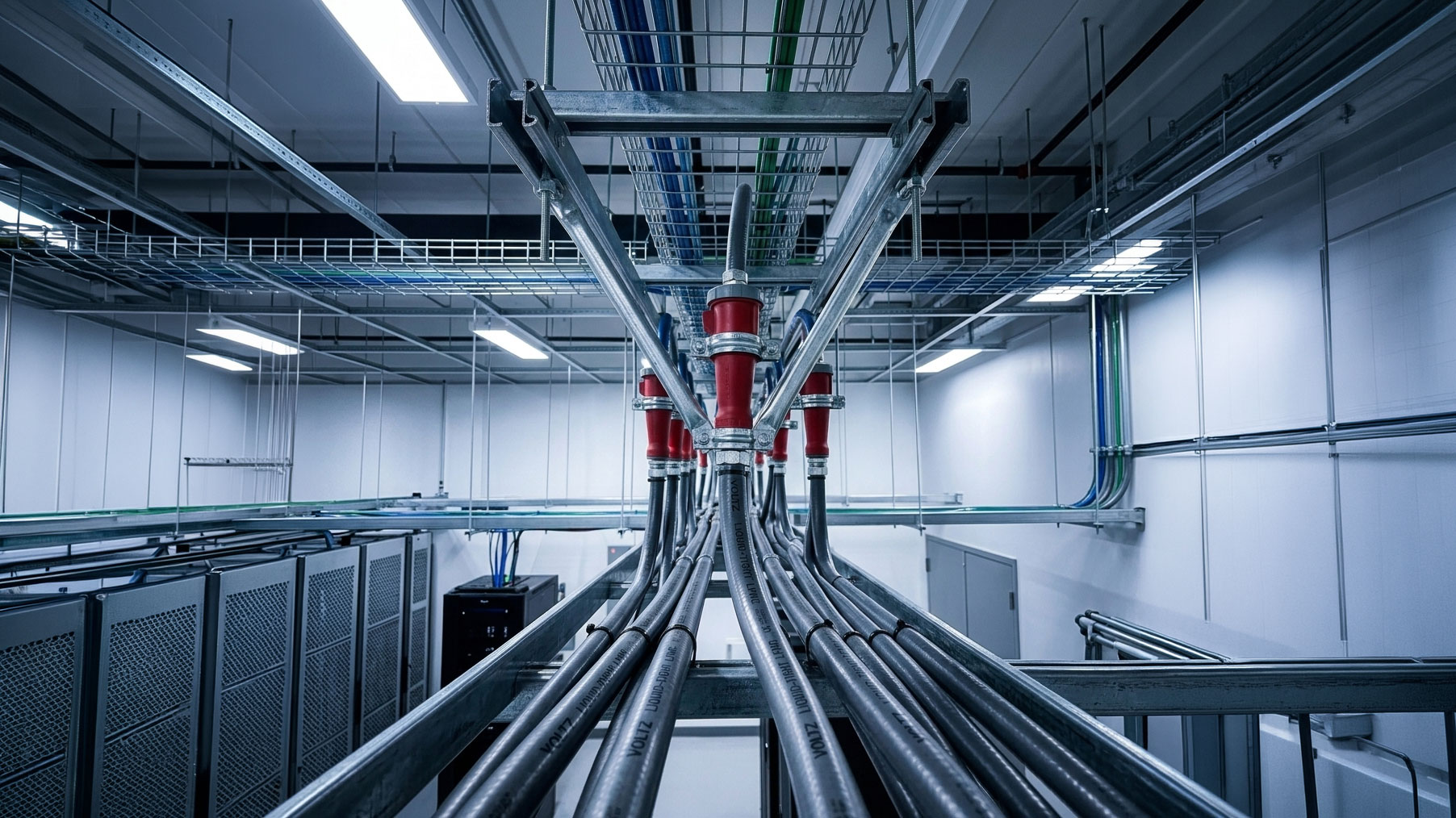
When designing hyperscale data centers in seismically active regions or high-vibration industrial zones, structural engineers spend vast resources securing heavy equipment racks, raised-floor pedestals, and overhead busway grids.
However, the flexible branch circuits connecting Remote Power Panels (RPPs) to high-density AI server racks often represent an overlooked structural vulnerability. When an earthquake or structural shockwave hits, unanchored or improperly supported power whips can whip violently, shearing connections, tearing conduit glands, and causing sudden grid-wide electrical shorts.
In high-density AI clusters drawing continuous high-amperage loads, a sheared power connection does more than drop compute nodes—it risks severe arc flash events and structural physical damage across the whitespace. Ensuring complete facility uptime requires engineering structural anchorage and seismic compliance directly into your branch circuit deployment strategy.
Navigating NEC and IBC Structural Regulations
Securing branch circuits in seismically active zones demands compliance with both electrical and structural building codes. National Electrical Code (NEC) Article 350 and the International Building Code (IBC) enforce strict physical support and strain standards for flexible conduit runs:
- Securing & Supporting Intervals: Flexible metal conduit must be securely fastened at regular intervals—typically within 12 inches of every outlet box, junction box, or fitting—to prevent excessive lateral sway during seismic movement.
- Seismic Restraint Brackets: Overhead cable tray runs and underfloor plenums in Seismic Design Categories C through F require specialized, shock-absorbing trapeze supports and cable sway braces to mitigate kinetic energy transfer.
- Conductor Displacement Slack: Branch assemblies must incorporate calculated structural play without violating minimum bend radiuses. This prevents seismic shear forces from applying direct tensile load to terminal lugs and pin connections.
Failure to meet these structural standards can delay building certification during AHJ (Authority Having Jurisdiction) inspections and leave your AI infrastructure vulnerable to sudden physical disruption.
Built for Extreme Conditions: Voltz PowerWhips
Voltz PowerWhips by Raptor Power Systems are custom-built to deliver unyielding electrical and physical resilience under extreme environmental stress. Engineered to integrate seamlessly into seismically braced underfloor and overhead raceways, Voltz assemblies offer complete structural protection:
- Heavy-Duty Conduit Armor: Enclosed in top-tier Liquid-tight Flexible Metal Conduit (LFMC) featuring an interlocked steel core that absorbs vibrational shock, prevents crushing, and maintains grounding continuity during structural movement.
- Industrial Locking Interconnects: Terminated with high-impact IEC 60309 pin-and-sleeve plugs, NEMA locking devices, or industrial CS twist-locks fitted with heavy-duty strain-relief glands to prevent terminal disengagement during sway events.
- Custom Electrical Sizing: Fully configurable to support your facility’s exact power demands, from 15A up to heavy-duty 100A+ capacities and voltages ranging from 125V up to 480V.
Domestic Manufacturing & 100% Quality Verification
In critical infrastructure, uncertified or field-fabricated power whips present unacceptable structural and electrical risks. Every Voltz PowerWhip is a certified UL Listed cable assembly, manufactured under strict ISO 9001:2015 quality standards. Before leaving our 120,000-square-foot facility in Champaign, Illinois, every whip undergoes rigorous 100% factory verification testing—including insulation resistance (Megger testing), continuity mapping, and exact polarity checks.
While global logistics issues force project managers to wait 12 to 16 weeks for specialized hardware, Raptor Power Systems leverages a domestic US supply chain to provide 24-hour rapid quoting and guaranteed 4-week production lead times. Protect your physical infrastructure and keep your deployment schedule on track with power distribution engineered for extreme stability.